Prodrome
Early sign or symptom indicating disease onset.
In medicine, a prodrome is an early warning sign or group of signs—called prodromal symptoms—that often signals the start of a disease, appearing before the more specific symptoms that confirm a diagnosis. It covers the time from when the first symptom is noticed until the illness becomes more severe. The word comes from the Greek *prodromos*, meaning "running before." Prodromes can be vague, but in some cases they point clearly to a specific condition, like the aura that precedes a migraine.
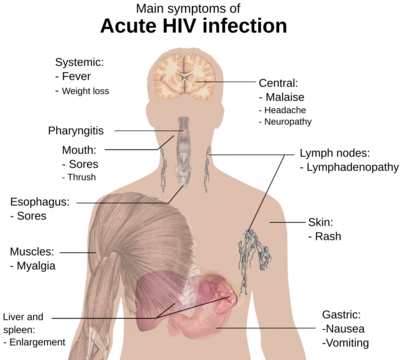
For example, fever, general discomfort, headache, and loss of appetite are common in the prodrome of many infectious diseases. A prodrome can also be an early sign of a chronic neurological disorder episode, such as a migraine or epileptic seizure. In these cases, prodromal symptoms—occurring days to an hour before the episode—may include mood changes like euphoria, insomnia, stomach sensations, confusion, trouble speaking, or sensitivity to light. An aura, by contrast, happens closer to the event. Prodromal labour, sometimes mistakenly called "false labour," refers to early signs before actual labour begins.
**In mental health**, the prodrome is a period when a person experiences some symptoms or a change in functioning that may signal an upcoming mental health disorder. Also called the prodromal phase, it involves early, subsyndromal changes in behavior, mood, or cognition before the full illness appears. Detecting the prodrome early allows for quick intervention, which may delay or reduce the severity of later symptoms.
**Schizophrenia** was the first disorder where a prodromal stage was identified. People who later develop schizophrenia often first have non-specific negative symptoms like depression, anxiety, and social withdrawal. These are usually followed by milder positive symptoms—such as trouble communicating, unusual perceptions, or odd thoughts that aren’t yet psychotic. Closer to the onset of psychosis, more serious signs appear, like pre-delusional thoughts, pre-hallucinatory perceptions, or speech disturbances. As positive symptoms worsen, combined with earlier negative symptoms, the person may meet the full criteria for schizophrenia. However, most people with some of these symptoms never develop schizophrenia; only about 20–40% eventually receive the diagnosis. A major challenge is predicting who among those with symptoms will go on to meet the full
- field
- Medicine
- known_for
- Early sign or symptom indicating disease onset
- etymology
- Greek prodromos, 'running before'
- examples
- Fever, malaise, headache, migraine aura, prodromal labour
- mental_health_application
- Subsyndromal stage before mental health disorder onset
Lore & Background
In medicine, a prodrome can be non-specific symptoms or, in a few instances, may clearly indicate a particular disease, such as the prodromal migraine aura. For example, fever, malaise, headache and lack of appetite frequently occur in the prodrome of many infective disorders. A prodrome can be the early precursor to an episode of a chronic neurological disorder such as a migraine headache or an epileptic seizure, where prodrome symptoms may include euphoria or other changes in mood, insomnia, abdominal sensations, disorientation, aphasia, or photosensitivity. Prodromal labour, mistakenly called 'false labour,' refers to the early signs before labour starts.
In mental health, the prodrome is a period during which an individual experiences some symptoms and/or a change in functioning, which can signal the impending onset of a mental health disorder. Schizophrenia was the first disorder for which a prodromal stage was described. People who go on to develop schizophrenia commonly experience non-specific negative symptoms such as depression, anxiety, and social isolation, followed by attenuated positive symptoms. The prodromal phase in schizophrenia can last anywhere from several weeks to several years. There is also growing evidence of a prodromal phase before the onset of bipolar disorder, with symptoms including too much energy, elated or depressed mood, and alterations in sleep patterns.
Several neurodegenerative diseases have a prodromal phase. In dementia with Lewy bodies, early signs and symptoms can appear 15 years or more before dementia develops, including constipation, dizziness, hyposmia, visual hallucinations, and rapid eye movement sleep behavior disorder. In Parkinson's disease, loss of sense of smell may aid in earlier diagnosis. Multiple sclerosis may have a prodromal phase. The prodromal phase of migraine is not always present and varies from individual to individual.
Reader's Guide
The concept of the prodrome is significant because it allows for early detection and intervention in a range of medical and mental health conditions. In schizophrenia, describing the prodrome has been useful in promoting early intervention; randomized controlled trials suggest that intervening with medication and/or psychotherapy can improve outcomes, including delaying conversion to psychosis. Screening instruments such as the Scale of Prodromal Symptoms and structured interviews like the Structured Interview for Prodromal Syndromes and the Comprehensive Assessment of At Risk Mental States (CAARMS) have been developed to identify individuals likely experiencing the prodrome. For bipolar disorder, early intervention is associated with better outcomes, with evidence supporting medication, family-focused therapy, Interpersonal and Social Rhythm Therapy (IPSRT), and Psychoeducational Psychotherapy (PEP). However, challenges remain: it is difficult to predict who among those with prodromal symptoms will develop full disease, and side effects of medication such as sedation and weight gain can occur. Ongoing research efforts include development of risk calculators and methods for large-scale population screening.
Did You Know?
- The term prodrome is derived from the Greek word prodromos, meaning 'running before.'
- Prodromal labour is mistakenly called 'false labour.'
- Schizophrenia was the first disorder for which a prodromal stage was described.
- In dementia with Lewy bodies, early signs can appear 15 years or more before dementia develops.
More in Symptoms 1-24
Spotted an error? Know more?
This is a living reference — every entry is fact-audited, and reader corrections feed straight into our audit queue. Suggest an edit · See this site's audit record