Influenza-like illness
A nonspecific respiratory illness often caused by viruses other than influenza.
Influenza-like illness (ILI), also called flu-like syndrome or flu-like symptoms, is a diagnosis given when a person might have influenza or another condition that produces a similar set of symptoms. These symptoms often appear suddenly and include fever, shivering, chills, a general feeling of being unwell, a dry cough, loss of appetite, body aches, nausea, and sneezing. These signs are usually triggered by cytokines released when the immune system activates, making them fairly nonspecific.
The term ILI is sometimes used casually, but in influenza surveillance it has a precise meaning. The World Health Organization defines ILI as a fever of at least 38 °C and a cough that started within the last 10 days. If the patient needs hospital care, the condition is instead called severe acute respiratory infection (SARI). Other groups set their own criteria; for instance, the CDC defines ILI as a fever of 100 °F (38 °C) or higher, plus a cough or sore throat.
The causes of ILI range from mild, self-limiting illnesses like gastroenteritis, rhinoviral disease, and influenza, to serious or life-threatening conditions such as meningitis, sepsis, and leukemia.
Technically, any clinical diagnosis of influenza is actually a diagnosis of ILI, not of influenza itself. This distinction usually doesn’t matter because most ILI cases are mild and resolve on their own. Moreover, except perhaps during a major influenza outbreak, most ILI cases are not caused by influenza. ILI is very common: in the United States, adults average 1–3 episodes per year, and children average 3–6 episodes per year.
Human influenza is monitored by a global network of over 110 National Influenza Centers. These centers receive samples from patients diagnosed with ILI and test them for influenza virus. Not every ILI patient is tested, and not all results are reported. Samples are chosen based on severity, as part of routine sampling, and at participating clinics and labs. The United States runs general, border, and hospital surveillance programs to detect new influenza outbreaks.
In most years, the majority of tested samples do not contain influenza virus. In the U.S. during the 2008–9 influenza season up to April 18, only 25,925 of 183,839 samples (14.1%) tested positive for influenza. The positive rate peaked at about 25%. This percentage rises with infection incidence, peaking alongside influenza a
- definition_WHO
- Fever ≥38°C and cough, onset within last 10 days
- definition_CDC
- Fever ≥100°F (38°C) and cough or sore throat
- annual_episodes_US_adults
- 1–3 per year
- annual_episodes_US_children
- 3–6 per year
- influenza_positive_rate_2008-2009
- 14.1% of tested samples
- peak_positive_rate_during_epidemic
- 60–70% of ILI cases
Lore & Background
Influenza-like illness is a common diagnosis used in clinical and surveillance settings. The World Health Organization defines it as a fever of at least 38°C and a cough that began within the last 10 days; if hospitalization is required, it is classified as severe acute respiratory infection (SARI). The CDC uses a similar definition but includes sore throat as an alternative to cough. Most cases of ILI are not caused by influenza but by other viruses such as rhinoviruses, coronaviruses, and respiratory syncytial virus. In the United States, each adult averages 1–3 episodes per year and each child averages 3–6 episodes per year.
Reader's Guide
ILI is significant because it serves as a surveillance tool for influenza outbreaks. A global network of over 110 National Influenza Centers tests samples from ILI patients to detect influenza viruses. During the 2008–2009 influenza season in the United States, only 14.1% of tested samples were positive for influenza, though during an epidemic, 60–70% of ILI cases are actually influenza. The diagnosis is nonspecific, and causes range from benign illnesses like the common cold to severe diseases such as meningitis, sepsis, and leukemia. ILI can also be caused by pharmaceutical drugs, including interferons, monoclonal antibodies, and chemotherapeutic agents, as well as by opioid withdrawal. The use of multiplexed point-of-care testing, such as CRP, may help identify bacterial causes and reduce unnecessary antibiotic prescriptions.
Did You Know?
- ILI is defined by the WHO as a fever ≥38°C and a cough beginning in the last 10 days.
- In the United States during the 2008–2009 influenza season, only 14.1% of tested ILI samples were positive for influenza.
- ILI can be caused by many non-infectious factors, including chemotherapy drugs, interferons, and opioid withdrawal.
- During an influenza epidemic, 60–70% of patients with clear ILI actually have influenza.
The Cytokine Signature and Clinical Presentation
Influenza-like illness presents as a constellation of symptoms that strike with notable suddenness: fever, shivering, chills, a dry cough, body aches, nausea, loss of appetite, malaise, and sneezing. What unites these varied manifestations is their shared origin in the body's immune response. When the immune system activates, it releases cytokines, and these signaling molecules are responsible for producing the characteristic flu-like picture. Because cytokines are a general feature of immune activation rather than a response specific to any single pathogen, the resulting symptom set is inherently non-specific. This is why ILI remains a diagnostic category rather than a single disease. The condition is extraordinarily common in everyday life. In the United States, an average adult experiences one to three episodes annually, while children endure three to six. In the vast majority of instances, the illness is mild and resolves on its own within a few days, requiring no intervention beyond rest and supportive care.
The Global Surveillance Machinery
Behind every ILI diagnosis lies a vast international infrastructure designed to detect influenza outbreaks before they spiral. More than 110 National Influenza Centers worldwide receive respiratory samples from patients diagnosed with ILI and test them specifically for influenza virus. These samples are typically collected by a physician, nurse, or assistant using simple methods such as wiping the nasal passage with a dry cotton swab, then sent to a hospital laboratory for preliminary analysis. Not every ILI patient is tested, and not every result is reported; samples are selected based on severity, routine sampling protocols, and participation in surveillance clinics. In the United States alone, three dedicated programs—general, border, and hospital surveillance—work to identify emerging outbreaks. The 2008–9 season illustrated the scale: of 183,839 samples reported to the CDC, only 25,925 (14.1%) tested positive for influenza, with the peak positivity rate reaching roughly 25%. During a true epidemic, however, 60 to 70 percent of patients presenting with clear ILI symptoms actually carry the influenza virus.
A Differential Diagnosis Without Boundaries
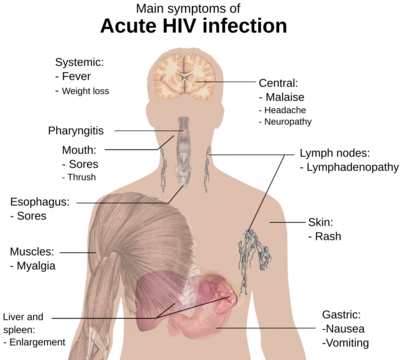
One of the most striking aspects of ILI is the sheer breadth of conditions that can mimic it. The causal spectrum stretches from benign, self-limited ailments like gastroenteritis and rhinoviral infections to grave, potentially fatal diseases including meningitis, sepsis, and leukemia. Beyond influenza and the common cold, the list of infectious culprits includes respiratory syncytial virus, human metapneumovirus, malaria, acute HIV infection, herpes, hepatitis C, Lyme disease, rabies, myocarditis, Q fever, dengue fever, poliomyelitis, pneumonia, measles, SARS, and COVID-19. Bacterial agents such as Legionella, Chlamydia pneumoniae, Mycoplasma pneumoniae, and Streptococcus pneumoniae also feature prominently. The non-infectious causes are equally diverse: interferons, monoclonal antibodies, chemotherapeutic agents, bisphosphonates, caspofungin, levamisole, influenza and other vaccines, and opioid withdrawal can all trigger a flu-like syndrome. During the 2009 pandemic, thousands of ILI cases were reported in media as suspected swine flu, yet most proved to be false alarms, underscoring how easily the syndrome can be misattributed.
Definitional Boundaries and Clinical Classification
The term ILI occupies a curious space between casual medical language and rigid epidemiological criteria. In everyday usage, it simply describes a cluster of flu-like symptoms. In surveillance contexts, however, definitions become precise. The World Health Organization classifies an illness as ILI when a patient exhibits a fever of 38 °C or higher accompanied by a cough, with onset within the preceding ten days. If the condition escalates to the point of requiring hospitalization, it is reclassified as a severe acute respiratory infection, or SARI. The U.S. Centers for Disease Control and Prevention offers a slightly different formulation, accepting either a cough or a sore throat alongside the 100 °F (38 °C) fever threshold. Other organizations may adopt yet different criteria. A subtle but important technical point exists: any clinical diagnosis of influenza is, by definition, also a diagnosis of ILI, since influenza is one cause among many. Physicians navigating these cases rely on epidemiologic context, clinical examination, and when necessary, laboratory and radiographic testing to pinpoint the true etiology. Multiplexed point-of-care tests, such as C-reactive protein assays, can help distinguish bacterial from viral causes and prevent unnecessary antibiotic prescriptions.
Gallery

More in Symptoms 1-24
Spotted an error? Know more?
This is a living reference — every entry is fact-audited, and reader corrections feed straight into our audit queue. Suggest an edit · See this site's audit record