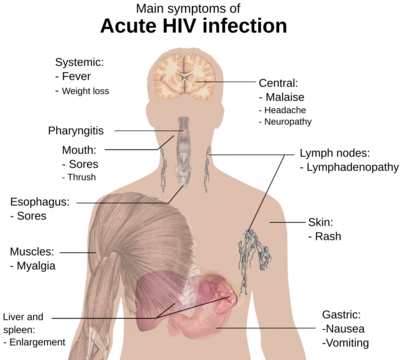
Hematospermia
Blood in ejaculate, usually benign, may signal cancer after 40.

Wikipedia / Wikimedia Commons
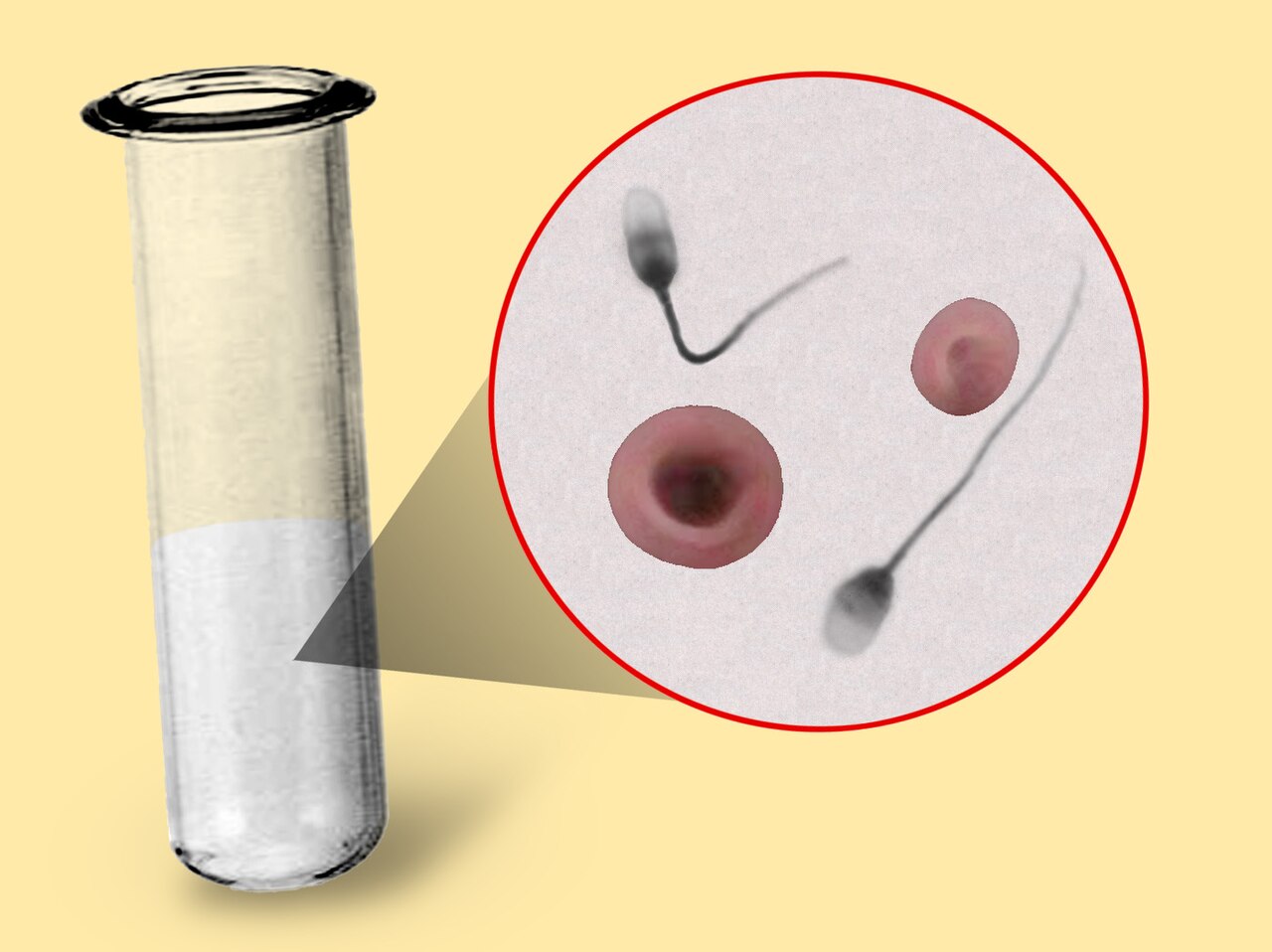
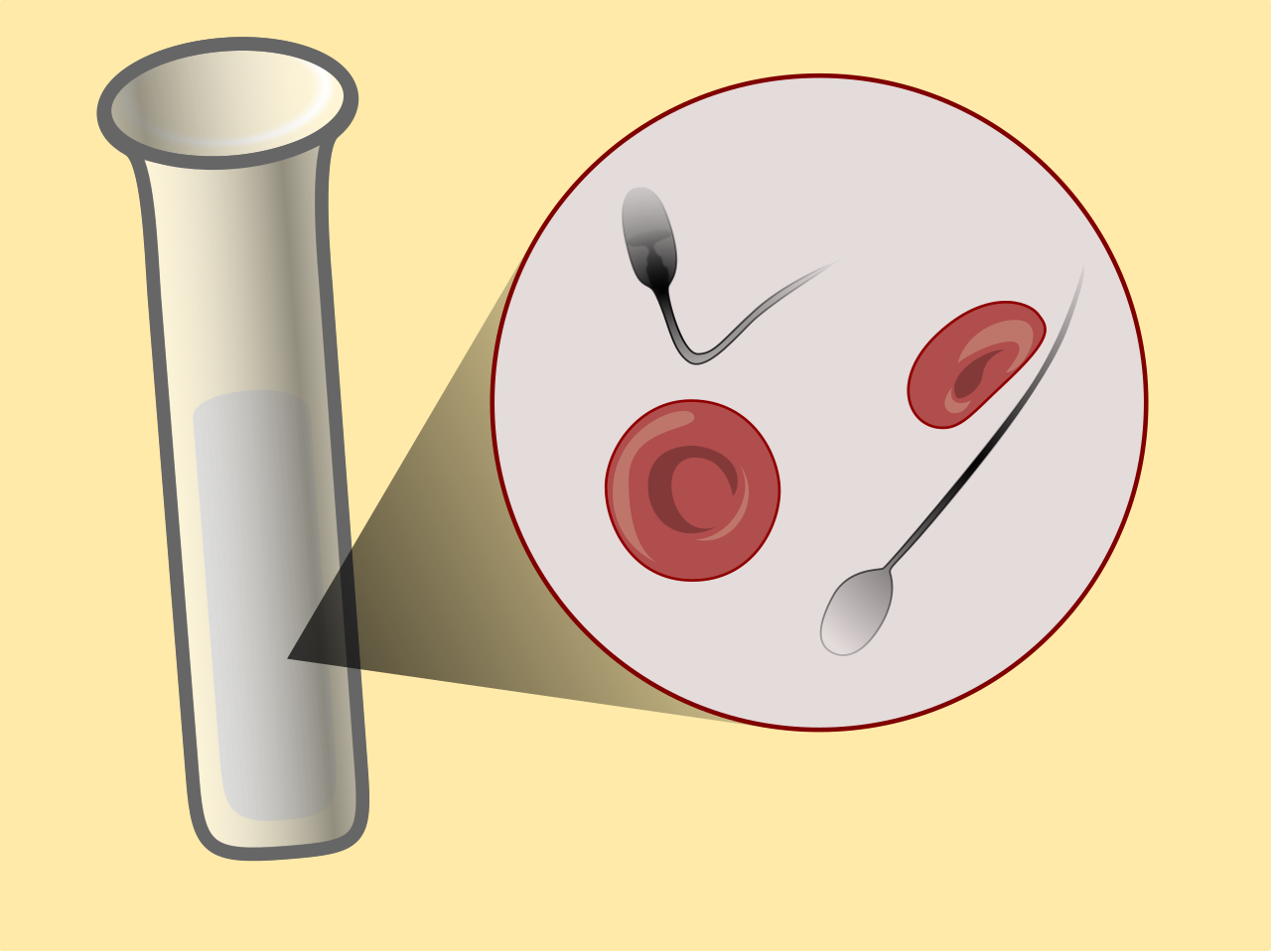
Hematospermia (also called haemospermia or hemospermia) means blood is present in the ejaculate. While this can be alarming for patients, it is usually a benign symptom. In men aged 40 or older, it is a minor indicator of possible cancer, most often prostate cancer. In up to 70% of cases, no specific cause is identified.
**Causes** Infections and inflammation are the most common triggers, especially in younger men. Bacteria such as *E. coli*, gonococci, *Treponema pallidum*, *Chlamydia trachomatis*, and *Neisseria gonorrhoeae* may be involved, as well as viruses like herpes simplex type 1 or 2 and HPV. Rarely, chronic infections like tuberculosis or schistosomiasis are responsible. Inflammation of the testicles, prostate, or epididymis can also cause hematospermia.
Cancers of the genitourinary system—including prostate cancer, testicular or epididymal tumors, seminal vesicle carcinoma (rare), and urethral tumors—may present with blood in the ejaculate. Lymphomas and leukemias can also feature this symptom.
Prostate conditions such as prostatitis, stones, cysts, benign prostatic hyperplasia, and bacterial infection are linked to hematospermia.
Other causes include systemic issues like malignant hypertension, liver dysfunction, bleeding disorders, and amyloidosis. Trauma to the genital area, structural anomalies (e.g., vascular abnormalities, polyps, urethral malformations), and certain sexual behaviors—such as excessive sex or masturbation, prolonged abstinence, interrupted intercourse—can lead to isolated episodes.
**Diagnosis** Evaluation focuses on identifying the cause when possible and ruling out infection or malignancy. It is important to exclude pseudo-hematospermia, where blood comes from a partner during intercourse.
**Epidemiology** The exact frequency is unknown, but hematospermia is reported in about 1 in 5,000 patients at initial urology outpatient visits. Most affected individuals are between 30 and 40 years old, and the symptom accounts for roughly 1% of all urological complaints.
**History** Traditionally, this condition was considered a harmless result of prolonged sexual abstinence or intense sexual activity.
- field
- Urology
- known_for
- Presence of blood in the ejaculate, often benign but can indicate malignancy in older patients
- common_age_range
- 30–40 years
- incidence_in_clinic
- 1 per 5,000 initial urological examinations
- percentage_of_urological_symptoms
- ~1%
- unknown_cause_rate
- Up to 70%
Lore & Background
Hematospermia has traditionally been thought a clinically insignificant consequence of prolonged sexual abstinence or intense sexual experiences. However, modern understanding recognizes that while isolated episodes are usually benign, recurrent hematospermia may indicate a more serious underlying pathology, particularly in patients over 40 years of age. The exact cause cannot be determined in up to 70% of patients.
Reader's Guide
Hematospermia is a symptom rather than a disease, with a broad differential diagnosis. The most common causes are infections and inflammations, including those from Gram-negative bacteria, gonococci, Chlamydia trachomatis, and viruses such as HSV and HPV. Prostate pathologies—such as prostatitis, calculi, cysts, and benign prostatic hyperplasia—are also frequent contributors. Malignant causes, though less common, include prostate cancer, testicular or epididymal tumours, and rarely seminal vesicle carcinoma or urethral tumour. Systemic conditions like malignant hypertension, liver dysfunction, bleeding disorders, and amyloidosis may also present with hematospermia. The main focus of evaluation is to determine the cause and rule out infection and malignancy, including distinguishing pseudo-haematospermia where blood originates from the partner. Though the exact incidence is unknown, it is reported in one per 5,000 patients at urological outpatient clinics, most commonly in men aged 30–40, and accounts for about 1% of all urological symptoms.
Did You Know?
- Hematospermia is most often a benign and self-limiting condition caused by infections, particularly in younger patients.
- Among men age 40 or older, hematospermia is a slight predictor of cancer, typically prostate cancer.
- No specific cause is found in up to 70% of cases.
- Excessive sex or masturbation, prolonged sexual abstinence, interrupted sex, and certain sexual behaviors may result in mostly isolated events of hematospermia.
A Mostly Reassuring Presentation
Hematospermia—the appearance of blood within the ejaculate—carries a name that understandably alarms the men who experience it. Yet in the vast majority of cases, the condition is benign and self-limiting, particularly among younger patients. A single, isolated episode is generally regarded as harmless and is unlikely to signal any malignant process. The psychological distress it provokes often far outweighs the actual medical risk. The picture shifts, however, when episodes recur. In men aged forty and older, repeated hematospermia warrants closer scrutiny because it can serve as a modest predictor of cancer, most commonly prostate cancer. This age-stratified risk is what drives clinicians to differentiate between a one-off, benign event and a pattern that may point toward a more serious underlying pathology. Understanding this distinction is central to how the condition is approached in clinical practice.
Infection and Inflammation as the Leading Culprit
Among all the potential triggers for blood in the ejaculate, infectious and inflammatory processes stand out as the most frequently implicated. A wide spectrum of pathogens has been linked to the condition, ranging from common Gram-negative organisms such as E. coli to sexually transmitted agents including gonococci, Chlamydia trachomatis, Neisseria gonorrhoeae, and Treponema pallidum. Viral contributors include herpes simplex virus types one and two as well as human papillomavirus. In rarer instances, chronic systemic infections like tuberculosis or schistosomiasis can produce the same visible sign. Beyond discrete infections, generalized inflammation of the testicular, prostatic, or epididymal tissues may also manifest as hematospermia. This broad infectious and inflammatory category explains why the condition clusters in younger, sexually active men and why a single episode in that demographic is so often dismissed as a transient, self-resolving event.
When the Underlying Cause Runs Deeper
While infection tops the list, hematospermia can also be a harbinger of more serious pathology. Malignant tumors of the genitourinary tract—prostate cancer, testicular or epididymal neoplasms, urethral tumors, and the exceedingly rare seminal vesicle carcinoma—may all present with blood in the ejaculate. Lymphomas and leukemias have similarly been associated with the symptom. On the non-malignant side, a range of prostate conditions including prostatitis, prostatic calculi, cysts, benign prostatic hyperplasia, and bacterial infection can all produce the same visible sign. Systemic factors such as malignant hypertension, liver dysfunction, bleeding disorders, and amyloidosis occasionally surface through this presentation. Local trauma to the genitourinary region, as well as congenital structural anomalies like vascular malformations, polyps, or urethral malformations, round out the list. Even behavioral factors—excessive sexual activity, prolonged abstinence, or interrupted intercourse—have been noted as triggers for isolated episodes.
Evaluating the Patient and Understanding Prevalence
The diagnostic workup for hematospermia centers on two priorities: identifying a specific cause when one exists and, critically, excluding both infection and malignancy. Clinicians must also guard against pseudo-hematospermia, a scenario in which the blood actually originates from the sexual partner during intercourse rather than from the patient's own genitourinary system. Despite these investigative steps, the frustrating reality is that in as many as seventy percent of cases no definitive etiology is ever established. In terms of prevalence, the exact incidence remains unclear, but the condition has been documented in roughly one out of every five thousand patients presenting at urological outpatient clinics. It is estimated to account for approximately one percent of all urological symptoms, with the majority of affected individuals falling in the thirty-to-forty age bracket. Historically, before modern urological understanding took hold, the condition was often dismissed as a trivial consequence of prolonged sexual abstinence or particularly intense sexual experiences.
Gallery
More in Symptoms 1-24
Spotted an error? Know more?
This is a living reference — every entry is fact-audited, and reader corrections feed straight into our audit queue. Suggest an edit · See this site's audit record